Opalux Inc. is a start-up founded to commercialize an IP portfolio of photonic crystal display technology developed at the University of Toronto.
President & CEO: Paul Chan
Location: Toronto, Canada
Industry: Advanced Materials/Chemicals
Venture is: A-Round
Opalux has developed a technology that delivers full color reflective display using little or no power from its photonic crystal and responsive polymer combination. Opalux technology relates to photonic crystals in combination with responsive polymers providing full spectrum tunable colors. Electrically tunable types are ideal for e-paper color displays while mechanically tunable types have applications in product or brand authentication and document security.
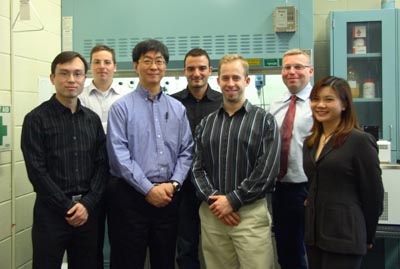
Opalux focuses on application and product development to drive the sale of its photonic crystals and responsive polymer products. With a team of five nanomaterial and polymer chemists, Opalux has transitioned fundamental research into product development agreements with two major corporations in separate industry sectors for applications in reflective displays and document security.
Initial products will be co-developed with strategic partners to fast track commercial introduction, revenue generation and market presence. Opalux has also developed a ready-to-use brand authentication product for general distribution. Opalux is currently seeking $3 million in financing to scale up its photonic crystal production, to finalize production process development and production start-up, and to begin marketing and sales of its brand authentication product line.